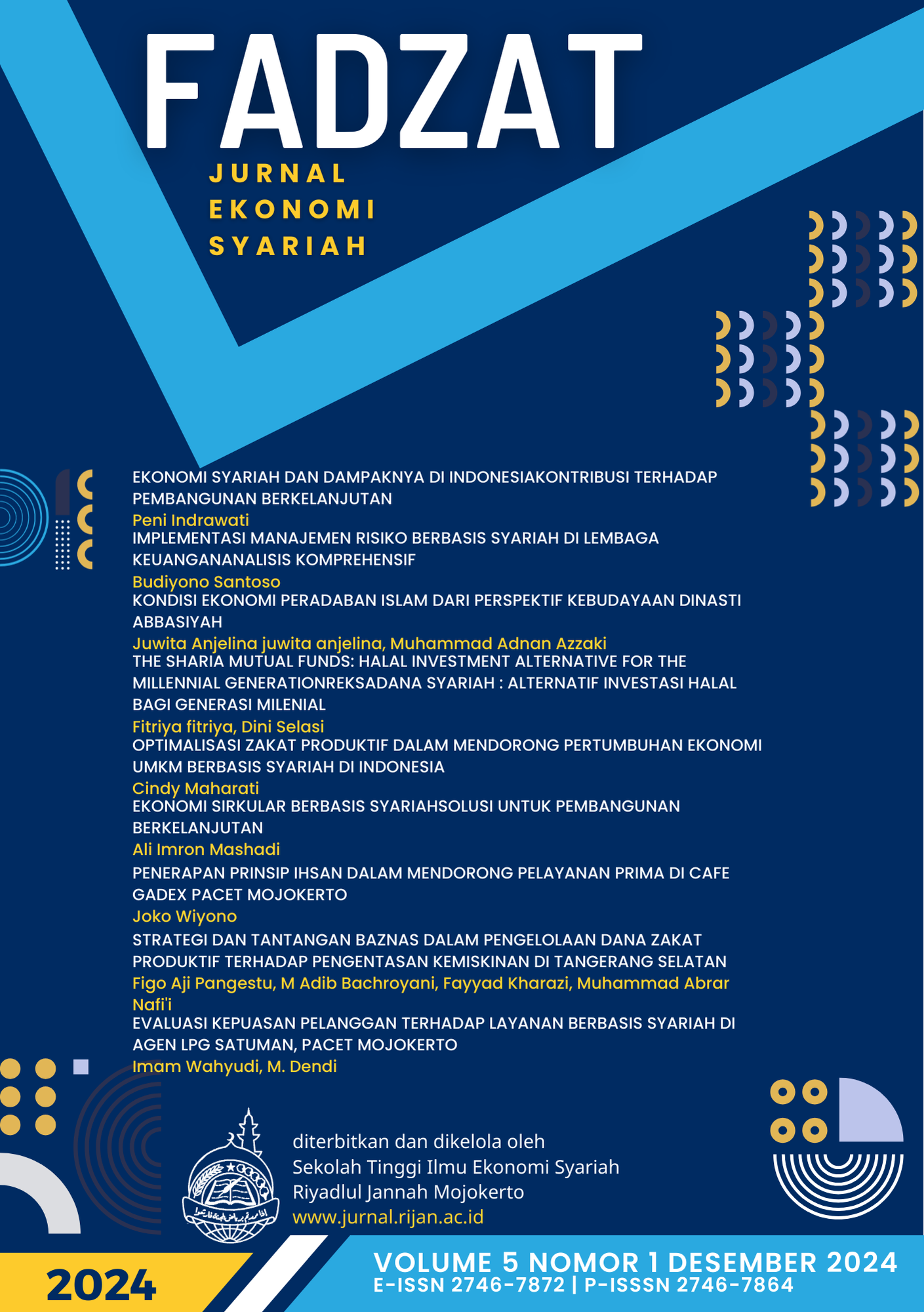
Optimalisasi Zakat Produktif dalam Mendorong Pertumbuhan Ekonomi UMKM Berbasis Syariah di Indonesia
DOI:
https://doi.org/10.58787/fdzt.v5i1.211Keywords:
productive zakat, Islamic MSMEs, economic empowerment, Islamic economics, poverty reduction, zakat institutionsAbstract
This study aims to examine the strategic role of productive zakat in promoting the growth of sharia-based micro, small, and medium enterprises (MSMEs) in Indonesia. Employing a qualitative-conceptual approach through an extensive literature review, the research offers a theoretical and empirical synthesis of the contributions of productive zakat across three economic levels: micro, meso, and macro. The findings reveal that productive zakat not only increases income and economic self-reliance among beneficiaries (mustahik) but also strengthens local Islamic economic ecosystems and supports national poverty reduction efforts. These contributions position zakat as a transformative and sustainable socio-economic instrument. However, the optimization of productive zakat faces structural challenges, including weak institutional integration, low Islamic financial literacy, and underdeveloped regulatory frameworks. Therefore, institutional transformation is necessary through empowerment-oriented fiscal policies, digitalized beneficiary data systems, and alignment of zakat programs with the national roadmap for sharia-based MSME development. Overall, the study confirms that productive zakat holds great potential as a foundational pillar for an inclusive, just, and sustainable Islamic economic system.
Downloads
Published
How to Cite
Issue
Section
License
Copyright (c) 2024 Cindy Maharati

This work is licensed under a Creative Commons Attribution-NonCommercial-NoDerivatives 4.0 International License.